Dental implants need enough healthy jawbone to anchor to. When bone has been lost — often after teeth have been missing for a while — bone grafting rebuilds it by adding bone material that your body integrates over a few months. A sinus lift is a specific graft in the upper back jaw that gently raises the sinus floor to make room for implants. These procedures are common, predictable, and often what allows people who were told they “don’t have enough bone” to become implant candidates after all.
One of the most discouraging things a patient can hear is that they’re “not a candidate for implants” because of bone loss. The encouraging truth: in most cases, that’s a solvable problem. Procedures like bone grafting and sinus lifts are designed specifically to rebuild the foundation that dental implants need. Here’s how they work.
Why Bone Matters for Implants
An implant works by fusing with your jawbone, which anchors it as securely as a natural tooth root. That requires enough healthy bone in both height and width. The problem is that when a tooth is lost, the bone that once supported it begins to shrink — a process called resorption. The longer a tooth has been missing, the more bone may be lost. This is also why replacing teeth sooner rather than later can make treatment simpler.
Bone Grafting: Rebuilding the Foundation
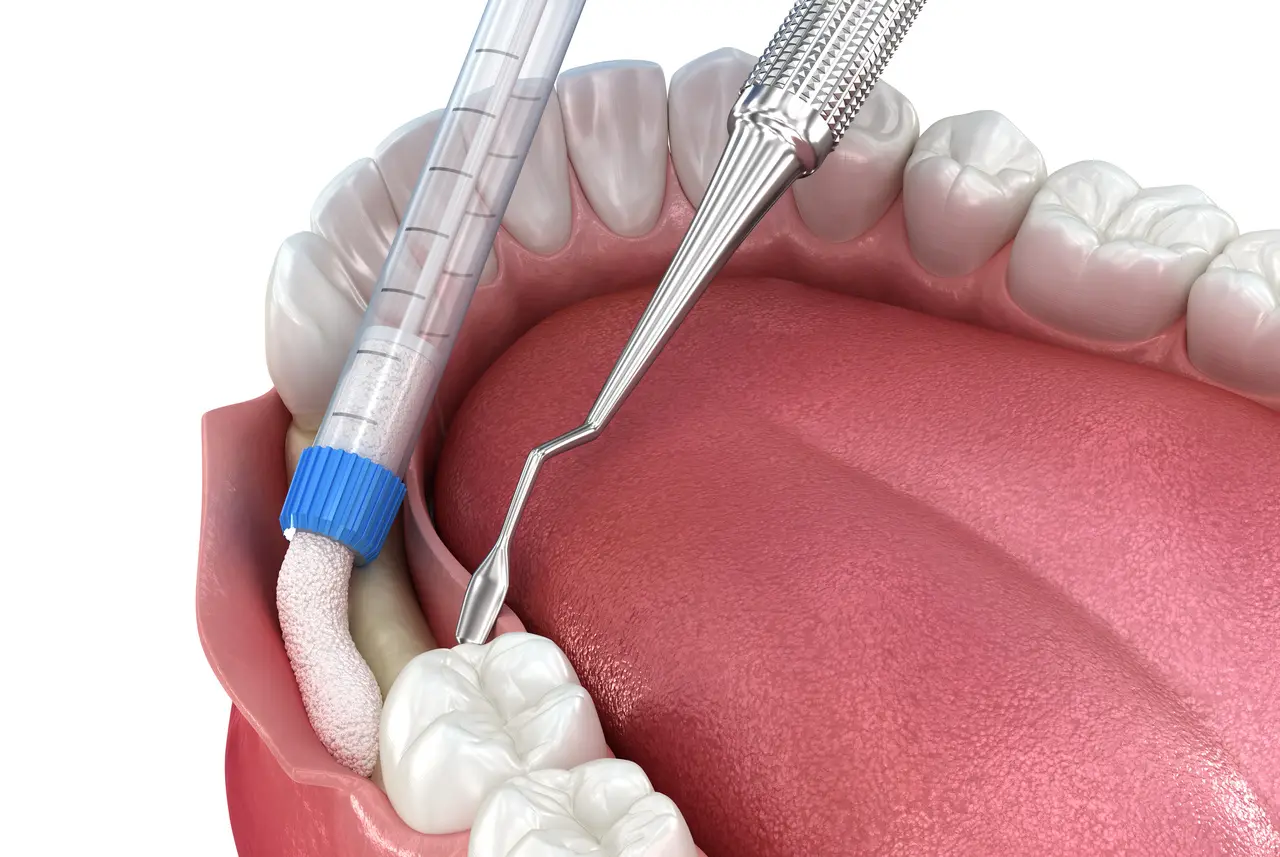
Bone grafting adds material to areas where bone has been lost, creating a scaffold that your body gradually replaces with its own new, healthy bone. Over a healing period of a few months, the site becomes strong enough to support an implant.
Grafting is more routine and comfortable than most people expect, and it opens the door to treatment for patients who thought implants were off the table. In cases where the ridge of bone is too narrow, a related procedure called ridge augmentation rebuilds width as well as height.
Sinus Lifts: Making Room in the Upper Jaw
The upper back jaw is uniquely challenging for implants because the sinus cavities sit just above it, and there’s often limited bone between them. A sinus lift gently raises the sinus membrane and places bone graft material in the space beneath it, creating the height needed to place an implant securely.
It’s one of the most common procedures that makes upper-jaw implants possible — and a key reason modern implant dentistry can restore smiles that would have been impossible a generation ago.
Planning It All with Precision
Whether you need grafting, a sinus lift, or neither, the key to a smooth result is detailed planning. Our team uses 3D CBCT imaging and computer-guided implant planning to map your bone precisely and plan every step before treatment begins. For patients pursuing full-arch solutions, this planning is what makes options like All-on-4 predictable — and sometimes helps avoid grafting entirely by using the bone you already have.
What Recovery Is Like
Recovery from grafting or a sinus lift is typically mild — some swelling and tenderness for a few days, managed with standard pain relief. The main investment is time: the graft needs a few months to fully integrate before the implant is placed. Many patients find the wait well worth it for a result designed to last decades.