The best way to replace missing teeth depends on how many are missing, your jawbone health, and your budget. Dental implants replace individual teeth with a permanent, root-like post and are the most durable, natural-feeling option. Dental bridges fill a gap by anchoring a replacement tooth to the neighboring teeth — a fixed, faster, lower-cost solution. Dentures replace many or all teeth and are the most economical, now available in implant-supported versions for far better stability. Many patients combine approaches. A consultation with imaging is the only way to know which fits your mouth and goals.
Losing a tooth — or several — affects more than your smile. It changes how you eat, speak, and feel, and over time it can shift your remaining teeth and weaken your jaw. The good news is that you have excellent options. The three main paths are dental bridges, dental implants, and dentures. Here’s how they compare so you can walk into your consultation already understanding your choices.
Dental Implants: The Gold Standard
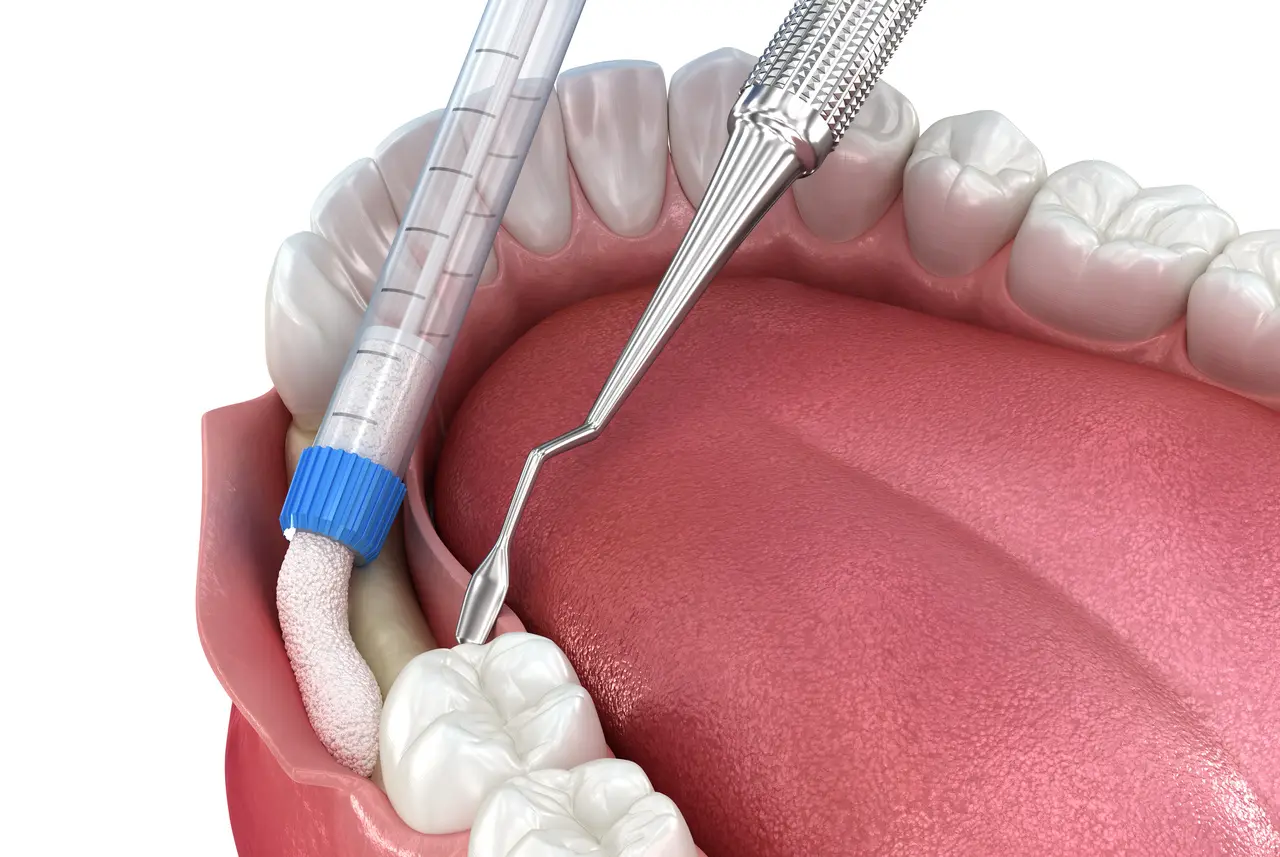
A dental implant replaces both the root and the crown of a missing tooth. A small titanium post is placed in the jaw, where it fuses with the bone, and a natural-looking crown is attached on top. Because it replaces the root, an implant stimulates the jawbone the way a natural tooth does — preventing the bone loss that other options can’t stop.
Implants are often best if you:
- Want the most permanent, natural-feeling solution
- Are replacing one tooth or want to avoid altering neighboring teeth
- Have enough healthy jawbone (or are open to bone grafting if needed)
- View your smile as a long-term investment
Implants also scale up: a full-arch restoration or All-on-4 can replace an entire row of teeth on just a few implants.
Dental Bridges: Fixed and Efficient
A dental bridge literally bridges the gap left by a missing tooth. A replacement tooth is held in place by crowns on the healthy teeth on either side. It’s a fixed, non-removable solution that’s typically faster and more affordable than an implant.
A bridge may be right if you:
- Are missing one or a few teeth in a row
- Have strong, healthy teeth on both sides of the gap
- Prefer a quicker, fixed solution without surgery
- Want a lower upfront cost than implants
The main trade-off: a traditional bridge requires reshaping the neighboring teeth, and it doesn’t prevent bone loss beneath the gap the way an implant does.
Dentures: Versatile and Economical
Modern dentures and partials are a far cry from the bulky versions of the past. They replace many or all of your teeth, look natural, and are the most budget-friendly way to restore a full smile. Partials fill in several missing teeth, while full dentures replace an entire arch.
The biggest modern upgrade is stability. Implant-supported dentures snap onto a few implants, so they stay firmly in place — no slipping, no adhesives — while keeping the lower cost of a denture-based solution.
Dentures may be right if you:
- Are missing most or all of your teeth
- Want the most economical full-mouth solution
- Would like a removable option, or a secure implant-supported one
How to Choose: A Simple Framework
It comes down to a few questions: How many teeth are you replacing? Is preserving jawbone a priority? What’s your timeline and budget? One missing tooth with healthy neighbors might point to an implant or a bridge; a full arch might point to All-on-4 or implant-supported dentures. There’s rarely one “right” answer — only the right answer for you, which is why a personalized evaluation matters.